Ultimate Tent Buying Guide: Families, Beginners, Backpacking, and Outdoor Adventures
A practical tent buyer’s guide for choosing the right shelter based on weather, comfort, budget, group size, and how you actually camp.
Buying a tent should be simple....should be.
Instead, you end up staring at 400 nearly identical tents online while every company claims their shelter is waterproof, ultralight, stormproof, military-grade, and apparently capable of protecting you better than Blue Origin protected Katy Perry.
The truth is simple: there is no universally perfect tent.
The best tent depends on how you actually camp, where you camp, who you camp with, and how much comfort you expect once the sun goes down.
This guide will help you choose the right tent for camping, survival training, backpacking, family trips, or beginner outdoor adventures without getting buried under marketing nonsense.

Jump Ahead
Tent Buying Guide
There is no single best tent, only the best tent for the way you actually camp. That is good news, because it makes filtering through the 67 million available tents a little easier. Instead of trying to find the “perfect” tent, you can focus on the one that actually fits your trips, your people, your weather, and your budget.
A tent that works great for a family campground trip may be terrible for backpacking. A lightweight backpacking tent may be perfect on the trail, but miserable if you’re camping with kids, dogs, coolers, chairs, and half the garage.
Before you buy anything, start with answering as many of the following questions as you can.
What do you need this tent to do? Where will you use it most?
How many people will sleep in it?
Will you carry it on your back or drive it to camp?
Will you camp in rain, heat, wind, or cold?
Do you need standing room, gear storage, or just a place to sleep? Will you spend time in your tent if it's raining? How much do you want to spend on a tent?
Are you buying for comfort, survival training, backpacking, or casual weekends?
A good tent should match your environment, weather, group size, comfort expectations, and how far you plan to carry it. If those things don’t line up, even a high-end tent can feel like the wrong tool.

Once you answer these the right tents should start popping out!
A family camping tent should prioritize space, comfort, and weather protection.
A backpacking tent should prioritize weight, packed size, and reliability.
A bushcraft or survival shelter should prioritize durability, adaptability, and field usefulness.
Remember, a $60 tent can be a great purchase if you understand its limits. It becomes a bad purchase when you expect it to perform like a four-season mountain shelter.

Our goal here isn't to convince you to buy one product or another but simply give you a buying guide so you can buy the optimal tool for your next trip!
Tent Features: What Really Matters
"Each evening, I ached for the shelter of my tent, for the smallest sense that something was shielding me from the entire rest of the world, keeping me safe not from danger, but from vastness itself." — Cheryl Strayed
Before you get into brands, colors, pole designs, or whether the tent looks cool in a photo, focus on the things that actually affect your trip.
The main things that matter are weather protection, capacity, weight, packed size, setup difficulty, ventilation, durability, comfort, and budget.
Weather protection a tent that doesn't keep you dry isn't doing its primary task. Look for a solid rainfly, a bathtub-style floor, sealed seams, strong stake-out points, and good coverage near the ground. You do not need an expedition shelter for casual camping, but you do need something that can handle real rain AND wind. This is a good "trust me bro" moment...trust me bro.
Capacity ratings are very optimistic. A “4-person tent” often means four sleeping pads can technically fit side by side, not that four people can sleep comfortably. Unless you want to squeeze in like ferrets in Pringles can, size up! If you want room for gear +1 occupant, if you also want room to change +2 occupants. If you're using cots, double it. 2 cots require a 4 person tent.
Weight and packed size depend on how you camp. If you are driving to a campsite, weight is not a huge deal. If you are backpacking, every pound matters. A heavy tent feels fine in your living room. It feels less fine three miles into a hike. Also check packed size. Some tents look reasonable until you try to fit them in a vehicle with coolers, chairs, sleeping bags, food bins, and the mystery bag of “just in case” items every family somehow brings.
Setup matters more than you think. A tent that is technically excellent but miserable to set up can still be the wrong tent. Look for simple pole structure, color-coded clips, a freestanding design, easy rainfly attachment, and clear stake-out points. The easier a tent is to set up, the more likely you are to set it up correctly.
Ventilation most overlooked tent features. A tent can be waterproof and still leave you wet inside because of condensation. This is especially common in humid climates, cold nights, rainy conditions, crowded tents, and poorly vented shelters. If you wake up and the inside of your tent is wet, it may not be leaking. Look for mesh panels, roof vents, airflow under the rainfly, and space between the rainfly and tent body.
Durability = fabric quality, pole strength, stitching, zippers, seams, and stake loops. Cheap tents can work fine for occasional mild-weather camping. The problem is expecting them to survive years of heavy use, strong wind, rough ground, and repeated storms. There is nothing wrong with budget gear when you understand its limits.
Comfort Can you sit up? Can you change clothes? Is there room for gear? Can wet gear stay outside the sleeping area? For families, comfort matters a lot because uncomfortable kids become everyone’s problem fast. If you're planning. a backpacking trip, weight is way more important.
Budget how often do you camp and what conditions you expect. If you are brand new, you do not need the most expensive tent on the market. Start with something appropraite for the conditions and upgrade once you learn you actually like it.
Tent Style | Pros | Cons |
Family/Car Tents | • Comfortable and roomy •Better for kids, groups, dogs, and gear • Great for campgrounds, state parks, and longer base camps • Best when you drive in and stay put | • Heavy and bulky • Slower to dry • Not practical to carry far • Larger tents need more campsite space • Can struggle in strong wind if poorly designed |
Backpacking Tents | • Lightweight and compact • Easier to carry • Built for mobility • Best for hiking, trail camping, and trips where packed size matters | • Less interior space • Lower headroom • Tighter sleeping quarters • Quality models can get expensive • Comfort is usually sacrificed to save weight |
Basecamp Tent | • Very durable and built for long term use • Better for semi-permanent camp setups • Great for extended stays • Canvas breathes better than many synthetic tents • More comfortable in changing temperatures • Can handle rougher weather | • Heavy and bulky • Expensive compared to basic camping tents • Not practical for backpacking • Requires more setup time and space • Overkill for casual weekend campers |

Family/Car Camping Tents
Best-in-Class: THE NORTH FACE Wawona 8 Tent

Why we recommend it
• Excellent interior space
• Standing-height design
• Large vestibule for gear storage
• Good family layout
• Strong brand reputation
• Better comfort for longer campground stays
Potential downsides
• Higher price - as one would assume
• Larger packed size
• Setup isn't the easiest
• Not ideal if you move campsites often
Built for family camping, group camping, and longer campground stays where comfort matters more than pack weight. The biggest advantage is livability. You get standing height, multiple entrances, large windows, strong ventilation, and a large vestibule that works well for shoes, bags, wet gear, camp chairs, or the pile of random stuff every family somehow brings.
Best Value: Kelty Daydreamer

Why we recommend it:
• Good balance of price and comfort
• Family-friendly design
• Light-blocking fabric
• More manageable than larger premium family tents
• Trusted outdoor brand
Potential downsides:
• Small vent may cause condensation at capacity
• Can feel dark inside during the day
• Footprint may be sold separately
The Kelty Daydreamer is a strong value pick for families who want a comfortable camping tent without jumping into premium pricing. It is built for front-country camping, weekend trips, state parks, and family campground use. The standout feature is the darker, light-blocking fabric, which is great for families with kids who nap, go to bed early, or wake up the second the sun starts acting disrespectful. It gives you a practical, comfortable shelter for real weekend camping without overcomplicating the setup.
Budget: Amazon Basics Camping Tent

Why we recommend it:
Affordable
Simple dome-style setup
Includes a removable rainfly
Good entry-level option
Works for mild-weather weekend camping
Easy to replace or upgrade later
Potential downsides:
Not built for serious storms
Not as durable as premium camping tents
Limited headroom depending on size selected
Better for occasional use than frequent hard use
Partial rainfly coverage may limit protection in heavy rain
The Amazon Basics 3-season dome tent is the budget pick for beginners who want to get outside without overthinking the purchase. It has the basic pieces you want in a starter tent, including a free-standing dome design, removable rainfly, water-resistant coated polyester, welded seams, and simple setup. This is not the tent I would choose for harsh weather, long-term heavy use, or rough conditions, but for mild-weather camping, backyard practice, casual weekends, and families testing the waters, it makes sense.: Amazon Basics Camping Tent, 3-Season Dome Design with Rainfly
Backpacking Tents
Best-in-Class: Hilleberg Nallo Series

Why we recommend it:
True 4-season backpacking design
Excellent storm protection
Built for serious wind and bad weather
Strong balance of durability and packability
Great for experienced backpackers and harsh conditions
Long-term investment shelter
Potential downsides:
Very expensive
Tunnel tent design requires solid staking
More tent than most casual backpackers need
Not as beginner-friendly as simpler freestanding tents
Can feel warm in mild southern conditions
The Hilleberg Nallo Series is the best-in-class pick for backpackers who want serious weather protection and long-term durability. These are lightweight 4-season tunnel tents built for year-round trekking, rough weather, and trips where shelter failure is not something you want to gamble with. This is not the casual weekend budget pick. It is a premium backpacking shelter for people who camp often, travel in tougher conditions, and want gear they can trust when the weather gets spicy.
Best Value: MSR Hubba Hubba LT

Why we recommend it:
Lightweight backpacking design
Freestanding setup
Good interior space for the weight
Strong ventilation
Good vestibule storage
Reliable brand reputation
Better balance of comfort and packability
Potential downsides:
Still expensive compared to budget tents
Lightweight materials require care
Footprint may be sold separately
Not built for true 4-season winter use
More focused on backpacking than campground comfort
The MSR Hubba Hubba LT is the best value pick for backpackers who want a reliable, lightweight tent without jumping all the way into ultra-premium expedition pricing. It gives you a strong mix of packability, ventilation, usable interior space, and weather protection in a design that is easier to manage than many more specialized shelters. For most backpackers who want a dependable tent for regular trail use, this is the kind of middle-ground option that makes a lot of sense.
Budget: Naturehike Cloud-Up Series

Why we recommend it:
Affordable backpacking option
Reasonably lightweight
Compact packed size
Simple setup
Good entry point for new backpackers
Available in multiple sizes and fabric options
Lets beginners test backpacking before spending premium money
Potential downsides:
Durability can vary by model and use
Less interior space than some other options
Not built for heavy long-term abuse
The Naturehike Cloud-Up Series is the budget pick for people who want to try backpacking without draining the bank account first. It gives beginners a lightweight, compact shelter that works well for learning what they actually like and dislike on the trail. This is not the tent I would recommend for years of hard mountain use, but for casual backpacking, starter trips, and budget-conscious campers, it is a realistic way to get outside and build experience.
Basecamp Tents
Best-in-Class: WHITEDUCK Alpha Canvas Wall Tent

Why we recommend it:
Heavy-duty canvas wall tent design
Excellent for semi-permanent basecamp setups
Large usable interior space
Built-in stove jack
Strong frame system
Good fit for hunting camps, outdoor classrooms, long-term camps, and cold-weather setups
Designed for serious extended use
Potential downsides:
Heavy and bulky
Requires more setup time than standard camping tents
Needs proper drying and storage
Requires a larger campsite footprint
More expensive than smaller canvas shelters
The WHITEDUCK Alpha Canvas Wall Tent is a serious basecamp shelter for people who want space, durability, and long-term field usefulness. It is built around a wall-tent design, which gives you more usable interior room than many sloped shelters, making it a strong fit for hunting camps, outdoor classrooms, extended family camps, and cold-weather setups. With canvas construction, a built-in stove jack, and a frame system designed for longer stays, this is the kind of tent you consider when you want camp to feel more like a working base than a quick overnight stop.
Best-in-Class: Kodiak Canvas Cabin Lodge Series
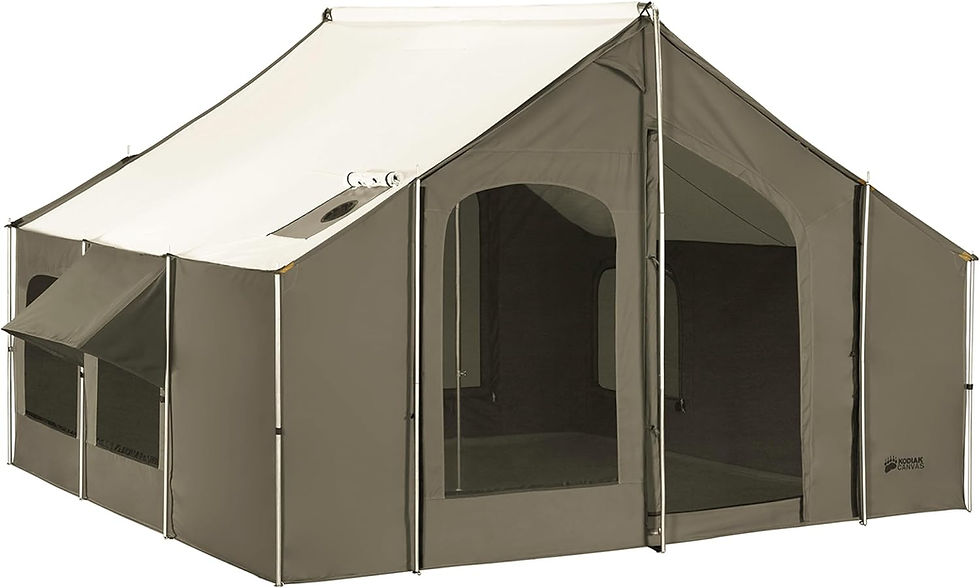
Why we recommend it:
Heavy-duty canvas construction
Great for semi-permanent basecamp setups
Stove-ready models available
Standing-height interior
Strong weather protection when properly set up and maintained
Good option for hunting camps, outdoor classrooms, and extended stays
Potential downsides:
Heavy and bulky
Requires more setup space
Needs proper drying and maintenance
Not practical for frequent campsite moves
More expensive than basic camping tents
The Kodiak Canvas Cabin Lodge Series is built for people who want a serious basecamp shelter, not a quick weekend pop-up tent. These canvas cabin-style tents offer strong durability, standing-height comfort, solid weather protection, and stove-ready options for colder conditions. They make the most sense for extended camps, outdoor classrooms, hunting setups, family basecamps, and situations where you want a shelter that can stay up longer and handle repeated use.
Budget: White Duck Regatta Canvas Bell Tent

Why we recommend it:
Spacious bell tent design
Canvas construction
Good standing room near the center
Stove-jack models available
Useful for glamping, family camping, and basecamp setups
More approachable price point for canvas shelter buyers
Potential downsides:
Round layout is less efficient along the edges
Center pole affects interior layout
Still heavy and bulky
Needs proper drying before storage
Not ideal for high-mobility camping
The WHITEDUCK Regatta Canvas Bell Tent is a practical budget-friendly canvas shelter for people who want more space and comfort in a basecamp-style setup. The bell tent design gives you a roomy interior, good center height, and a classic camp feel that works well for family camping, glamping setups, hunting camps, and longer stays. It is still a canvas tent, so it requires care, drying, and proper storage, but it gives campers a solid way into the basecamp category without overcomplicating the setup.
Tent Buying FAQ
Camping and Tent Basics
What size tent should I buy?
Buy larger than the listed capacity if comfort matters. Most tents feel smaller once people and gear are inside.
What is the difference between a 3-season and 4-season tent?
3-season tents prioritize ventilation and lighter weight. 4-season tents prioritize storm resistance, stronger poles, and cold-weather performance.
Do I actually need a 4-season tent?
Probably not unless you regularly camp in snow, high winds, or harsh mountain conditions.
Should I buy bigger than I think I need?
Usually yes, especially for families, dogs, longer trips, or rainy weather.
Is standing room important?
For campground and family camping, absolutely. It makes long trips much more comfortable.
What is the best tent brand?
There is no universally best brand. Different companies excel in different categories and environments.
Should I buy one tent that does everything?
Usually no. Most tents are built around specific strengths and tradeoffs.
What should first-time campers avoid?
Buying a tent that is too small, overly complicated, or designed for the wrong environment.
Are cheap tents worth buying?
For beginners and occasional campers, yes. Just keep expectations realistic. And remember WHEN it breaks, it was cheap.
What matters most when buying a tent?
Weather protection, ventilation, size, durability, and choosing a tent that matches how you actually camp.
Weather, Ventilation, and Waterproofing
Why is my tent wet inside?
Most of the time it is condensation, not leaking. Moisture from breathing and body heat builds up inside the shelter.
How do I reduce condensation?
Increase airflow using vents, mesh panels, and proper rainfly setup.
What tent shape handles wind best?
Lower-profile dome tents generally handle wind better than tall cabin-style tents.
Are cabin tents bad in storms?
Not necessarily, but taller walls catch more wind than lower-profile tents.
What is the best tent for hot weather?
Tents with strong ventilation, mesh panels, and good airflow perform best in heat.
What is the best tent for cold weather?
Tents with stronger poles, less mesh, and better wind resistance work best in cold environments.
How waterproof does my tent really need to be?
Waterproof enough to handle sustained rain without leaking. Proper setup matters just as much as the tent itself.
What is a bathtub floor?
A bathtub floor extends several inches up the walls of the tent to help keep water out.
Should I get a full rainfly?
Yes. Full rainflies provide significantly better weather protection than partial rainflies.
Can UV damage a tent?
Yes. Long-term sun exposure slowly weakens tent fabrics and waterproof coatings.
Backpacking and Performance Tents
How heavy should a backpacking tent be?
Most backpackers aim for somewhere between 2–5 pounds depending on comfort and durability priorities.
Are ultralight tents durable?
Many are surprisingly durable, but lighter materials usually require more care.
Can I use a car camping tent for backpacking?
Technically yes, but most people regret carrying heavy tents long distances.
What matters most in a backpacking tent?
Weight, packed size, weather protection, and ease of setup.
Should I prioritize weight or durability?
That depends on how you camp. Long-distance backpackers often prioritize weight, while rough environments reward durability.
How small should a backpacking tent pack down?
Small enough to fit comfortably inside or attached securely to your backpack without dominating your loadout.
What tent works best in mountain environments?
Low-profile backpacking or four-season tents with strong wind resistance and reliable weather protection.
Tent Setup, Storage, and Maintenance
Are instant tents worth it?
For many families, yes. Fast setup becomes very valuable during bad weather or with kids.
Do I need a footprint under my tent?
No, a footprint helps protect the floor from abrasion, moisture, and rough ground but is not required.
Can I use a tarp instead of a footprint?
Yes, as long as it stays slightly smaller than the tent floor.
How should I store a tent?
Store tents clean, dry, and loosely packed out of direct sunlight. When you put it away avoid folding it the same every time. Stuffing avoids stressing a seam.
What usually fails first on tents?
Zippers, poles, and waterproof coatings are the most common failure points.
How long should a good tent last?
A quality tent can last many years if properly stored and maintained.
How do I clean a tent properly?
Use mild soap, water, and a soft sponge. Avoid harsh detergents and pressure washing.
How often should I reseal tent seams?
Only when necessary. Most modern tents come factory sealed but eventually wear down with heavy use.
Gear Guide
A few small tent accessories can make a huge difference in how long your shelter lasts and how comfortable camp feels. None of this needs to be fancy, but the right add-ons can help prevent leaks, reduce wear, keep your setup stable, and make the inside of your tent feel less like controlled chaos.
Ground Tarp / Footprint: Protects your tent floor from rocks, roots, moisture, and rough ground.
Extra Tent Stakes: Stronger stakes help keep your tent secure in sand, loose soil, wind, and storms.
Paracord or Guyline: Extra cordage helps with staking, repairs, tarp setups, drying gear, and general camp organization.
Rechargeable Tent Lantern: Makes it easier to move around, organize gear, and get settled after dark.
Tent Repair Tape: Fixes small tears before they turn into trip-ending problems.
Tent Waterproofing Spray: Helps refresh water resistance on older rainflies and tent fabric.
Seam Sealer: Reinforces one of the most common leak points on tents.

Want More?
If you found this guide helpful, there’s plenty more to learn. Subscribe to our Six Point Survival Newsletter for monthly tips and field-tested gear advice, and check out our YouTube channel for real-world demos and survival lessons.
Your support keeps Six Point Survival running — and trust me, caffeine is cheaper than therapy.
~ Micah Gillette
Donate to our Coffee Fund Now


Comments